
 Get emergency food
Financial hardship delaying major life milestones for young people
New research finds that financial hardship is forcing many young people to delay major life milestones, while millions of young people are struggling to afford essentials.
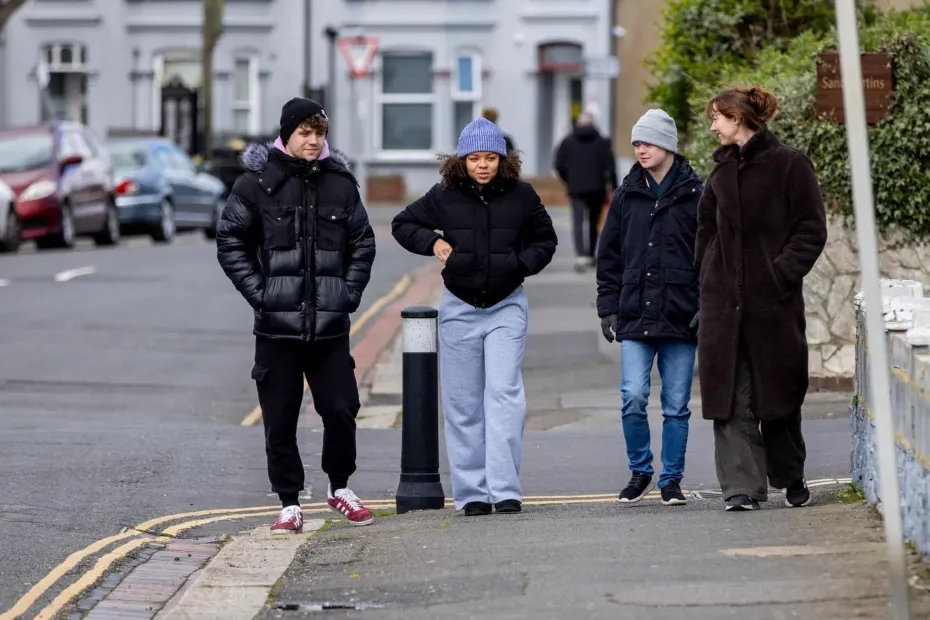
A survey of more than 4,700 young people aged 16 to 25 across the UK found that financial pressures are forcing young people to delay major life milestones such as moving out, learning to drive and buying a home, while millions are cutting back on essentials including food and toiletries in order to get by.
The research found that almost half (47%) of young people have had to delay moving out of their parents' home because of financial pressures, rising to 54% for young people who experienced financial hardship growing up.
Almost half (47%) said that financial pressures have delayed them learning to drive, rising to 61% for young people who grew up in financial hardship.
Meanwhile, more than half (55%) said financial pressures had delayed them being able to buy a home – rising to seven in ten (70%) for young people who experienced financial hardship growing up.
The findings also highlight how financial hardship is locking young people out of opportunities to build the financial security they need.
Young people who experienced financial hardship growing up are almost twice as likely to be not in education, employment or training (NEET) as people who didn’t experience hardship (27% compared with 15%).
Some 43% of young people said that financial pressures had delayed them progressing their careers, rising to 57% for people who experienced financial hardship.
Nearly half (45%) of young people saying that job opportunities are poor in their local area, rising to 59% of young people who grew up in financial hardship.
The research also found that 43% of young people looking for work think they will need to move elsewhere to find employment, but only a third who would need to move (34%) think they can afford to do so.
Fifty-five percent of young people who experienced financial hardship said it had a negative impact on their likelihood of going to university or into other higher education or training, compared to 30% to young people who did not grow up in financial hardship.
Alongside these barriers to independence and opportunity, many young people are struggling to afford the essentials, with young people who grew up in hardship among the worst affected.
Almost a third (31%) of young people said they had cut back on food so they could afford other essentials in the last three months – equivalent to 2.5 million people aged 16-25. For young people who grew up in hardship, this rises to more than half (52%).
The research also finds that one in six (18%) young people have skipped meals to afford to travel to work or school in the last three months, rising to 32% among young people who grew up in hardship.
Meanwhile, one in seven (14%) young people reported going without essential toiletries like shampoo, toothpaste or sanitary products over the past three months so they could afford food or utilities. This more than doubles to one in three (33%) among young people who experienced hardship growing up.
The survey findings come alongside newly released figures from food banks in the Trussell community which show that 240,000 emergency food parcels were provided to 17-24-year-olds in 2025 – a 53% increase compared with 157,000 in 2019.
The survey was co-designed with young people with lived experience of hardship to ensure that the survey questions used language that was age-appropriate, accessible and non-judgemental. The young people also helped to ensure questions were relevant and meaningful to young people and that the survey approached sensitive topics in a safe and respectful way.
Helen Barnard, Director of Policy and Research at Trussell, said:
“Today’s figures confirm what food banks and communities across the UK see every day: that too many young people are being held back because of financial barriers that are out of their control.
"Major milestones that previous generations often took for granted – like moving out of home or learning to drive – have become luxuries that are increasingly out of reach. At the same time, young people are being locked out of work, as they face limited job opportunities and cannot afford to move elsewhere to find work.
"Young people who grew up in financial hardship face the greatest barriers of all – and we know these barriers can shape people’s lives for years to come, limiting access to housing, education and employment.
“Without better support, we risk a generation of young people being weighed down by financial hardship and at risk of turning to a food bank. The new Prime Minister has pledged to 'bring back hope'. Hope starts with security and opportunity. That’s why Trussell is calling for better employment support and training opportunities, stronger financial security and improved support with housing costs – because every young person deserves a fair start in life.”
Tom Weekes, Head of Research at Trussell, said:
“Young adulthood should be about building independence and laying foundations for the future – not wondering how you’re going to put food on the table. But as young people grapple with a lack of job opportunities, sky-high rents and gaps in support, this has become the reality for far too many young people today.
“It's clear that a lack of investment in young people is having dire consequences. We need the UK government to act, and quickly, or risk seeing a generation of young people being forced to food banks.
“The UK government must recommit to its manifesto pledge of ending the need for emergency food – because it’s not right that anyone should have to turn to charity to survive.
“To meet that ambition, our new Prime Minister should invest in employment support and training, protect social security for under-25s, and improve housing support to give every young person today a fair start in life.”
Notes to editors
The research is based on:
- An online survey by Savanta on behalf of Trussell of 4,741 UK people aged 16-25. Fieldwork was undertaken from 15-30 June 2026. The figures have been weighted and are representative of all UK people aged 16-25.
- Someone is defined as experiencing hardship growing up if they sometimes or frequently did not have enough money to cover their essential needs.
- All analysis of the total number of young people cutting back on food is Trussell’s own and is based on data from mid-year population estimates on the number of young people across the UK (8,300,000 in 2024) and the percent of young people stating they had cut back on food to afford other essentials (31%).