
 Get emergency food
Hunger in the UK 2026
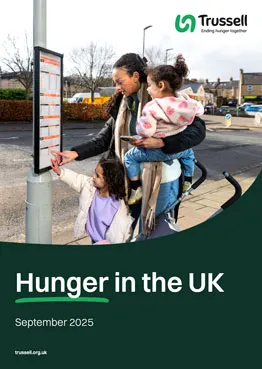
Hunger in the UK Wave 3
Hunger in the UK is Trussell’s flagship research series that provides a ‘state of the nation’ look at the scale, composition and drivers hunger and hardship across the UK.
The briefing wave presents evidence showing that there has been no progress in the number of people experiencing hunger and hardship since 2024. There are also concerning signs that the hardship many people face continues to deepen.
Key findings
This briefing builds on the two previous waves of this research, to build a clear and consistent picture of what is driving hunger in the UK:
- Incomes do not cover the essentials, including Universal Credit, support for disabled people and income from work.
- High costs are weighing down people on the lowest incomes, including unaffordable housing and energy.
- Unmet support needs and social isolation are deepening hunger and hardship in our communities.
Hunger and hardship are not inevitable, and are shaped by systems that can be improved with political will and policy solutions.
Explore the data
Report and briefings
Download the published reports and look out for more reports in this series coming soon. Across 2027, we will publish further findings from the data which will be published here.

About the research
The Hunger in the UK research project is a multi-year mixed methods research programme delivered in partnership with Ipsos, WPI Economics and food banks in the Trussell community. This briefing updates this evidence base and brings together measures of food insecurity, charitable food provision and severe hardship to build a deeper understanding of food bank need. The severe hardship measure was previously used in Trussell’s large-scale research project, The Cost of Hunger and Hardship.
The perspectives and participation of people who have needed to access emergency food have been integral to this research in not only understanding the problems that are driving food bank use, but also in crafting solutions to these problems.
To access the reports in alternative formats please contact research@trussell.org.uk