
 Get emergency food
Almost half of UK residents lost community spaces in past three years
New research finds people in most deprived areas are losing vital community spaces fastest.
Trussell reveals the findings as it prepares a showpiece for RHS Chelsea Flower Show – a community garden to be relocated to a food bank in Northern Ireland.
Today, anti-poverty charity Trussell reveals new research which finds almost half of UK residents (45%) have lost access to at least one local community space – such as a park, social club, library or post office – since 2023, with the steepest losses of social and recreational spaces reported in the most deprived neighbourhoods*.
Trussell says welcoming community spaces are vital for tackling hunger and hardship by combating isolation and helping people back on their feet. But its latest research points to a deepening divide in society with the erosion of community hubs and leisure spaces leaving families with fewer routes to support and connection.
People in the most deprived areas are more than twice as likely to say that local facilities helped them access advice or support on social security and money matters (24%) than people in the least deprived areas (12%). Yet one in ten people (10%) in the most deprived areas have little or no access to community spaces (compared to 5% of people in the least deprived areas). Worryingly, 39% of parents in the most deprived areas reported the loss of community spaces had a negative impact on their children’s development (compared to 20% in the least deprived areas).
Loss of local meeting places risks worsening isolation, the charity says, particularly in more deprived communities where loneliness is more acute. People on the lowest incomes were three times as likely to say they are often or always lonely than people on the highest incomes (16% versus 3%).
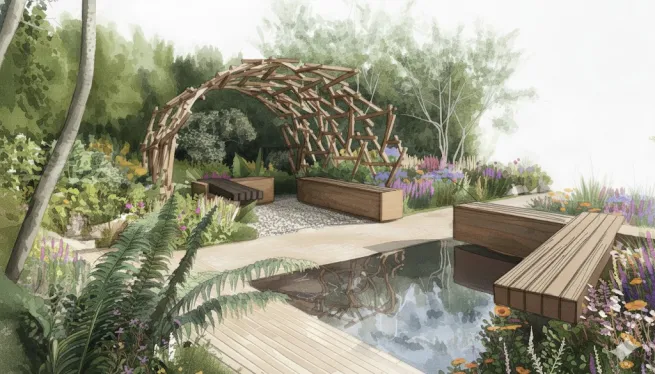
This comes as the charity prepares to unveil its ‘Together Garden’ at RHS Chelsea Flower Show next week. Designed by Rob Hardy and funded by Project Giving Back-funded, the garden reflects the power of community and people working together.
Last year, food banks in the Trussell community provided more than 2.6 million emergency food parcels to people facing hunger across the UK, including more than 900,000 for children. But food banks most often provide far more than food, offering a listening ear over a cup of tea, as well as advice and support or signposting to services helping on issues such as debt and navigating the social security system.
The charity said food bank support is only made possible by hundreds of people, like local services, schools, volunteers and the general public, coming together with a shared vision across their community. And this is what inspired the garden designer Rob to approach the charity to collaborate on the garden.
The theme of togetherness is woven throughout the garden’s design – through intersecting paths, and a reciprocal frame of timbers that each support one another, showing the power and strength of what is possible when we come together. There’s a water feature which is drained at the pull of a lever – unlocking more seating so larger groups of people can commune. The planting brings a rich mix of textures and colours, vibrancy, and breathing space, with each plant playing its part in creating a harmonious whole.
Building on this work for communities through food banks, and knowing that vital community spaces are under pressure, the charity has chosen to relocate the Together Garden to Strabane Foodbank in Northern Ireland. As one of the most deprived communities in Europe, with little or no access to green or public space, the charity wants to create a suitable legacy for the garden, providing a space for the whole community to come together for years to come.
With the vast majority of people across the UK agreeing community spaces are important for physical health (86%), mental health (83%) and enjoyment of life (84%), and 91% of parents saying they mattered to children’s wellbeing, the charity is urging the public to play its part in ending hunger in the UK and supporting the work of food banks in any way possible.
That could be through donating food, money, or time volunteering, or people using their voice to speak out and call for everyone to have enough money to be able to afford the essentials.
Matthew van Duyvenbode, co-chief executive at Trussell, said: “It’s really concerning to find that almost half of communities across the UK are losing vital places and spaces to come together. We all need community spaces to connect and to stay well – particularly when we are struggling in life. But our research highlights that these spaces are particularly at risk where they are needed most.
“We’re pleased and proud that our Chelsea Together Garden will be taken to Strabane Foodbank to help enrich the community there for years to come. The garden reflects the power of community, with people working together - from food banks supporting people today to all of us ending hunger forever.
“Our garden isn’t a food garden – because hunger in the UK isn’t a food problem. It’s a problem rooted in a lack of money, connection, and compassion. Food banks are a lifeline but not the solution. Our work shows that ending the need for food banks is possible. Things can change when we all act together. Our garden tells this story of how we will end hunger in the UK: together, with everyone playing their part.”
Rob Hardy, garden designer, said: “Our garden celebrates communities and Trussell’s vital support for people facing hunger and hardship. After volunteering in local food banks, I was so motivated by the incredible ways communities come together to support one another. It inspired me to approach Trussell to create a garden that showcased ‘togetherness’. When the garden is relocated to Northern Ireland it will act as a vital asset for the community to spend time together. The planting in the garden reflects the warmth and generosity found in real spaces of support and shows how together, we can end hunger.”
Ursula Doherty, manager at Strabane Foodbank, said: “We are so excited that our beautiful garden will feature at RHS Chelsea and can’t overstate what it means for our community. The garden is a space for connection over a cup of tea, symbolising that first moment people visiting a food bank feel really listened to and are connected to wider support.”
Notes to editors:
An online survey by Opinium on behalf of Trussell of 3,280 UK adults (18+). Fieldwork was undertaken 15-27 April 2026. The figures have been weighted and are representative of all UK adults (aged 18+).
In comparing the access to community spaces in the least to the most deprived areas Trussell is specifically comparing the experiences of people living in areas in the bottom 20% of the index of multiple deprivation to people living in the top 20%. Across other areas, 9% said they have little to no access to community spaces.
* The losses of community and social spaces are not evenly shared . In the most deprived areas, 23% of people say they had lost access to spaces where communities come together (e.g. community centres or halls) or social spaces (such as pubs and social clubs), compared with 14% of people in the least deprived areas.
Some 14% of people in the most deprived areas reported losing sports, leisure or outdoor facilities, compared to 10% of people in the least deprived communities.